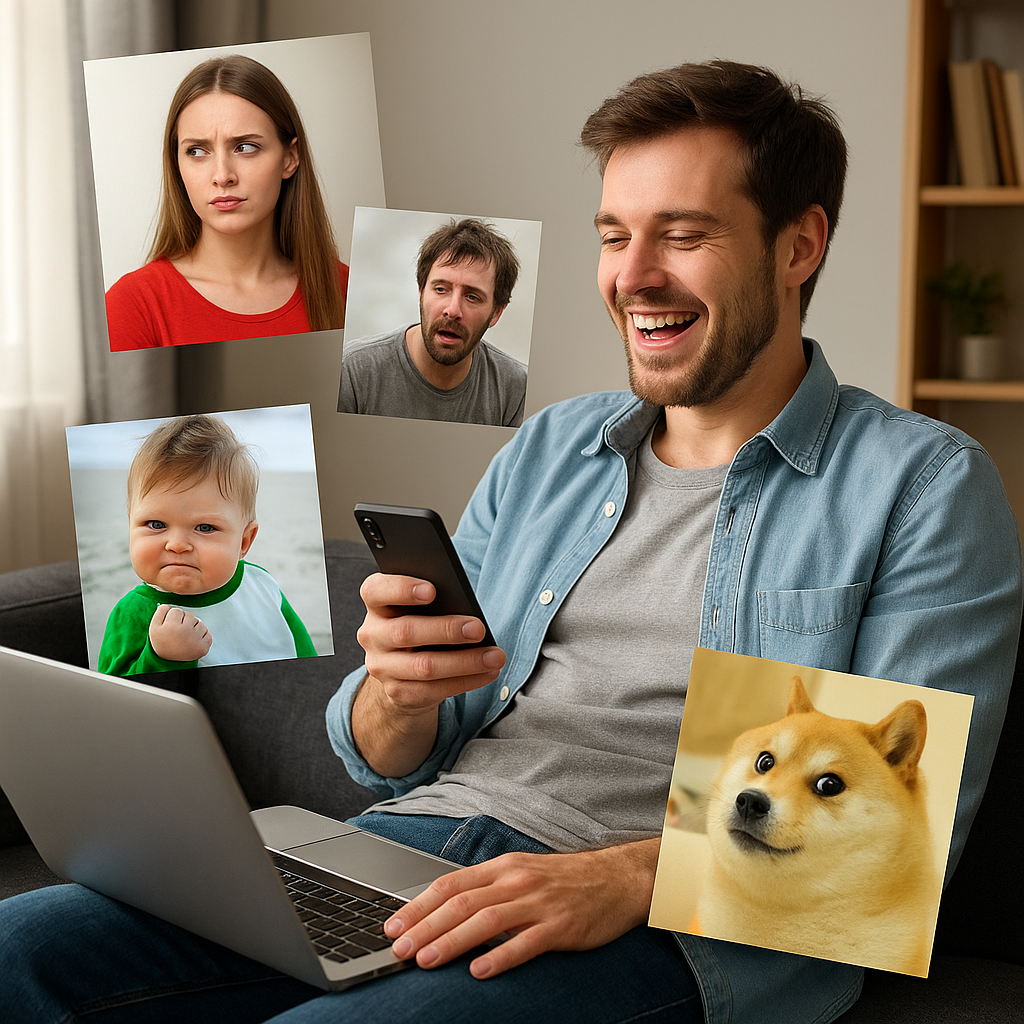
Memes have transcended simple images with captions to become a pivotal element of online communication. What began as playful exchanges on bulletin boards has evolved into a global language that shapes how people share ideas, express identity, and engage with events in real time. This article explores how memes have grown into cultural powerhouses, the role of social media in their proliferation, and the implications for modern digital culture.
Emergence of Memes as Cultural Symbols
Long before platforms like TikTok and Instagram, internet users on forums such as SomethingAwful and 4chan experimented with repetitive image macros that paired simple photos with witty text. These early memes functioned as inside jokes for niche communities, but they quickly demonstrated the virality potential inherent in combining humor with visual storytelling.
The term “meme” itself, coined by evolutionary biologist Richard Dawkins in 1976, referred to any idea or behavior that spreads within a culture. In the digital era, the concept found a fertile environment: rapid sharing, low barriers to creation, and instantaneous feedback loops created a breeding ground for rapid participation. Users adopted templates—think “Success Kid” or “Distracted Boyfriend”—and reshaped them to comment on everything from politics to pop culture.
Key factors in the early success of memes included:
- Accessibility: Free, easy-to-use image editors and meme generators lowered creative hurdles.
- Repeatability: Shared templates encouraged remix culture, turning every user into a potential contributor.
- Community: Forums and later subreddits formed tight-knit groups where inside references amplified the emotional resonance of each joke.
Role of Social Media Platforms
The rise of social media giants transformed memes from localized phenomena into unstoppable global forces. Platforms such as Facebook, Twitter, Instagram, and TikTok each introduced features that magnified the speed and reach of memes:
- Facebook’s easy sharing tools created viral loops through news feeds and group interactions.
- Twitter’s retweet function enabled real-time propagation of humorous or poignant image macros during breaking news events.
- Instagram’s visual-centric design spotlighted stylized meme pages with millions of followers.
- TikTok’s algorithm-driven “For You” page introduced short-form video memes that could amass billions of views overnight.
These platforms also fostered new forms of collaboration. Influencers and brands began to leverage memes for marketing, often hiring dedicated social media managers or meme specialists to craft shareable content. As a result, creativity and strategic timing became crucial skills in capturing audience attention in an oversaturated digital landscape.
Memes and Participatory Culture
One of the most compelling aspects of memes is how they reflect and reinforce a participatory cultural model. Every individual with an internet connection can not only consume memes but also adapt or create them. This dynamic interaction creates a sense of collective authorship. Memes become communal artifacts that capture societal moods, anxieties, and humor.
In this participatory ecosystem:
- Remixing serves as a form of commentary, with layers of meaning added as each iteration reflects contemporary events.
- Spoofing allows users to satirize both original content and the users who engage with it, fostering an ongoing dialogue of meta-humor.
- Response chains emerge, where a single meme spawns dozens or hundreds of variations in hours.
Through these practices, memes become lenses into public opinion, revealing trending topics and collective frustrations. Political movements have harnessed this power: memes played a notable role in the Arab Spring, Brexit debates, and various election cycles, illustrating how digital humor can dovetail with civic engagement.
Influence on Communication and Trends
Memes have reshaped linguistic norms and paved new pathways for expression:
- They introduced jargon and catchphrases—such as “OK boomer” or “Ight, Imma head out”—that transcend regional dialects.
- Their brevity and humor align with shrinking attention spans, making them ideal vehicles for delivering punchy commentary.
- They facilitate emotional connection through shared laughter, often breaking down barriers between strangers.
As cultural artifacts, memes can crystallize a collective sentiment with astonishing efficiency. A single viral image can spark global conversations about social justice, mental health, or environmental issues. This transformative potential has prompted marketers, educators, and non-profits to adopt meme-based strategies for awareness campaigns, recognizing that memes can deliver complex messages in digestible and engaging formats.
Responding to Memes: Engagement and Backlash
While memes foster community and creativity, they can also provoke controversy. Instances of cultural appropriation, hate speech, and misinformation have highlighted how easily memes can be weaponized. Platforms and users alike face the challenge of balancing free expression with preventing harmful content.
Responses to problematic memes include:
- Content moderation policies that flag or remove hateful imagery and targeted harassment.
- Counter-memes that parody or criticize offensive content, often flooding the same channels to drown out negative messages.
- Media literacy initiatives encouraging users to verify sources, understand context, and recognize manipulative tactics.
Despite these hurdles, the adaptability of meme culture allows for rapid correction and communal policing. When a harmful meme surfaces, countless users mobilize to educate others, replace it with more positive alternatives, or collectively mock the originators.
Looking Ahead: The Future of Meme Communication
As technologies like augmented reality (AR) and deepfake generation become more accessible, the nature of memes is set to evolve further. AR filters on social platforms will enable immersive, shareable experiences that blend real-world environments with meme templates. Meanwhile, AI-driven tools could automate meme creation, customizing content for individual preferences and boosting personalization.
Yet at its core, meme culture will remain anchored in its fundamental principles of participation, creativity, and shared understanding. Whether used for humor, activism, or marketing, memes will continue to reflect the ever-shifting tapestry of human thought and emotion in the digital age.