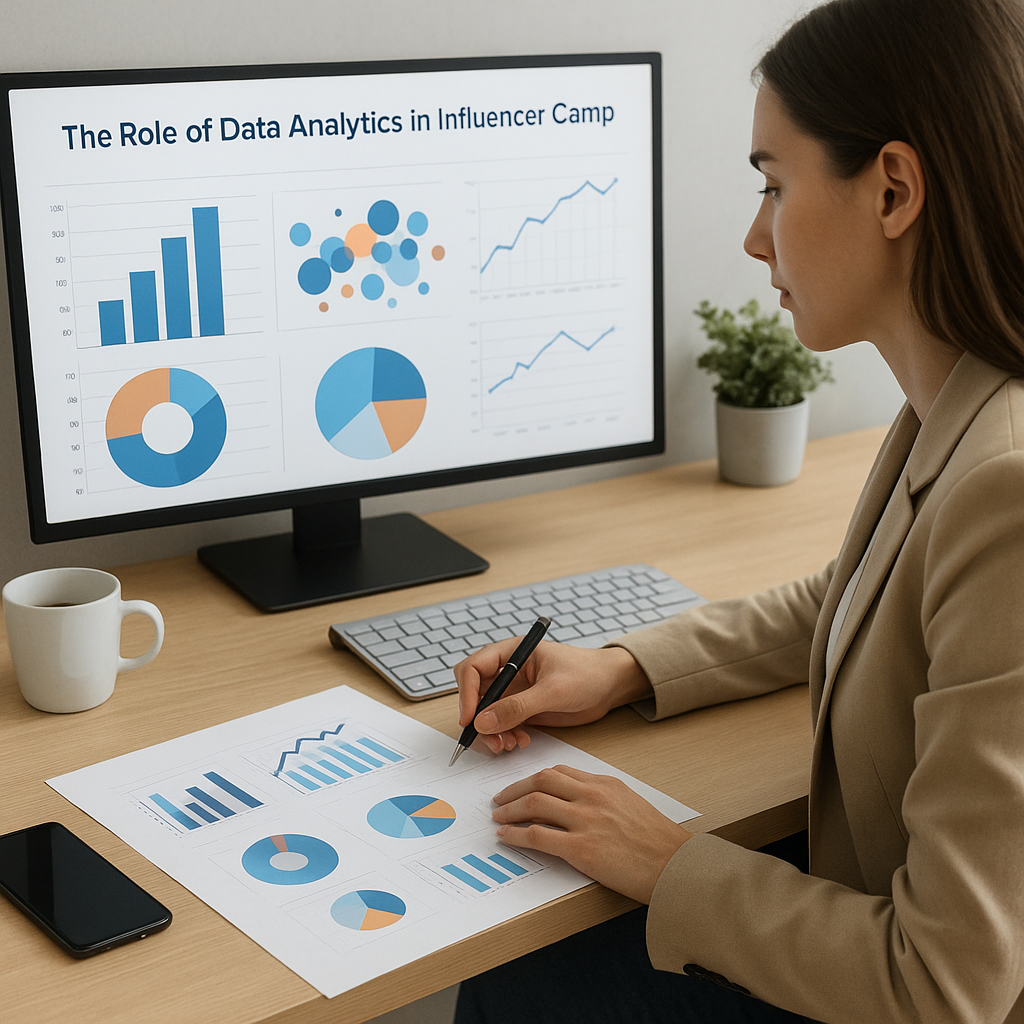
Effective influencer campaigns rely on much more than well-crafted visuals and charismatic spokespeople. Understanding how to harness the massive amounts of social interaction data generated every second is the key to refining strategy, boosting engagement, and achieving measurable outcomes. This article delves into how data analytics transforms influencer marketing, explores the tools and metrics driving success, and identifies emerging trends shaping the digital landscape.
Data Analytics Foundations
At the core of any modern influencer initiative lies robust data collection and interpretation. Marketers begin by mapping out their objectives—whether it’s brand awareness, lead generation, or direct sales—and defining relevant Key Performance Indicators. Common metrics include reach, impressions, click-through rates (CTR), and conversion rates. By establishing a clear baseline, teams can compare organic performance against campaign results to gauge incremental value.
Data is typically aggregated from multiple sources: social media platforms (Instagram, TikTok, YouTube, Twitter), influencer-generated content insights, and third-party analytics tools. This information feeds into centralized dashboards where real-time monitoring becomes possible. With sophisticated APIs and data pipelines, brands avoid manual reporting bottlenecks and ensure accuracy in every metric.
- Audience Demographics: Age, gender, location, and interests provide essential context for message tailoring.
- Sentiment Analysis: Natural language processing evaluates audience reactions as positive, neutral, or negative.
- Engagement Quality: Likes and shares are weighted against comments and saves to prioritize deeper interactions.
Leveraging Metrics for Campaign Optimization
Once data flows into your system, the next step involves turning raw numbers into actionable insights. Predictive analytics models can forecast potential campaign outcomes by examining historical performance patterns. For instance, if micro-influencers tend to yield higher conversion rates in a specific niche, algorithms can recommend budget reallocation towards similar profiles.
A/B testing remains a powerful technique for refining content formats, messaging, and posting schedules. By comparing two variants—say, a short-form video versus a static post—analysts can assess which creative drives superior ROI. These experiments need not be limited to creative elements; they can also evaluate different influencer categories (macro, micro, nano) to uncover the sweet spot between reach and authenticity.
Effective optimization revolves around continuous feedback loops. Weekly or even daily check-ins with live campaign dashboards allow teams to:
- Identify underperforming posts and pause partnerships that fail to meet cost-per-acquisition (CPA) thresholds.
- Spot trending audio tracks or content styles to pivot existing content calendars in near real time.
- Leverage sentiment shifts—such as sudden spikes in negative comments—to address issues before they escalate.
Advanced Segmentation and Targeting
Generic mass audiences are no longer sufficient for delivering standout results. Advanced segmentation techniques use clustering algorithms to divide potential customers into micro-groups based on behaviors, preferences, and purchase history. Campaigns customized for each cluster can significantly increase engagement rates and lower ad spend waste.
For example, a fashion brand might segment its audience by:
- Frequent buyers interested in sustainable materials.
- Trend-driven shoppers seeking high-end streetwear.
- Value-oriented consumers looking for budget-friendly essentials.
Influencer matching tools then pair each segment with creators whose audiences exhibit the desired traits. This approach ensures that every promotional message resonates more deeply, leading to higher click-through and conversion rates while preserving the campaign’s overall efficiency.
Real-Time Monitoring and Crisis Response
Social media is a dynamic environment where trends can emerge—and fade—within hours. Real-time monitoring platforms use APIs and streaming data to track mentions, hashtags, and sentiment shifts around your influencer campaigns. This instantaneous visibility enables swift decision-making, from boosting top-performing posts to mitigating negative feedback.
In the event of a reputation crisis—such as an influencer’s controversial statement—analytics teams can deploy rapid-response protocols. By analyzing historical engagement data and sentiment trends, they determine whether to pause partnerships, issue clarifications, or amplify positive messaging through alternative channels. A data-driven crisis response can significantly reduce long-term brand damage.
Trends and Future Directions in Influencer Analytics
Emerging technologies continue to reshape how brands leverage influencer data. Among the most transformative advances:
- AI-Powered Matching: Machine learning algorithms predict ideal influencer-target audience pairings with unprecedented precision.
- Blockchain Verification: Decentralized ledgers offer transparent tracking of campaign spend and content authenticity.
- Augmented Reality (AR) Metrics: New engagement data streams from AR filters and lenses expand the definition of interaction beyond likes and comments.
Another critical development is the rise of shoppable content. By embedding purchase options directly within influencer posts and tracking in-app conversions, marketers can measure the direct revenue impact of each collaboration. This seamless integration between social platforms and e-commerce systems represents a major leap in campaign accountability.
As regulatory scrutiny around data privacy intensifies, brands must also navigate evolving compliance standards while maintaining analytic rigor. Innovations in differential privacy and secure multi-party computation promise to balance consumer protection with the need for actionable insights.
Conclusion of Implementation Strategies
By integrating comprehensive analytics frameworks, brands can elevate influencer marketing from a qualitative art form to a precise science. Every campaign interaction becomes an opportunity to collect data, refine targeting, and maximize performance. In a landscape defined by constant change, the ability to measure, adapt, and optimize in real time is the defining attribute of successful influencer initiatives.